In London, everybody’s talking about the need for climate action. What is needed to deliver?
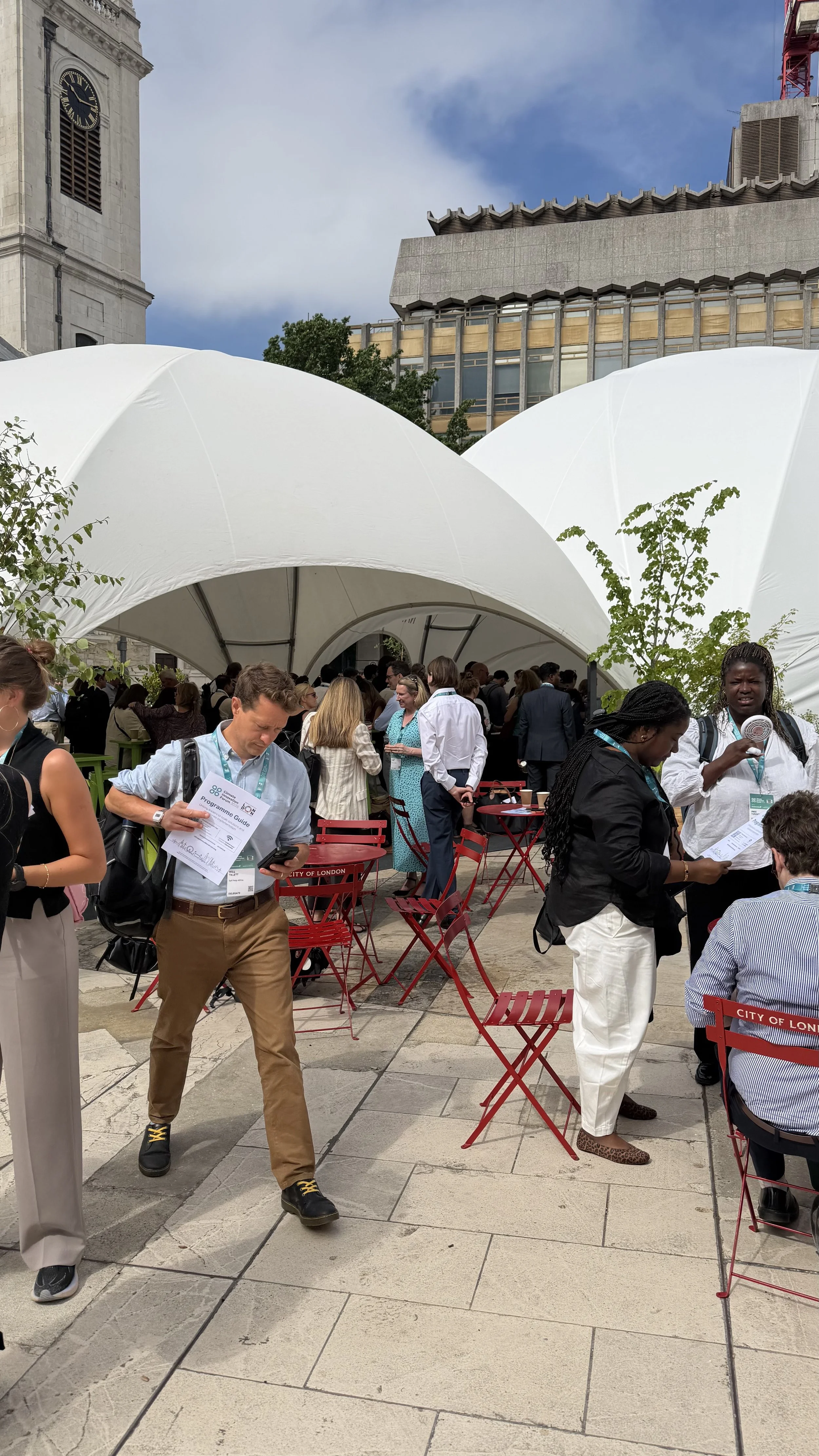
London was boiling today. Not metaphorically, but literally. It was a very hot day in the city, in what is already the hottest month on record and what is expected to be the hottest year on record. The Mayor’s office had issued a red warning, with June’s all‑time daily record temperature expected to be broken at 40 degrees.
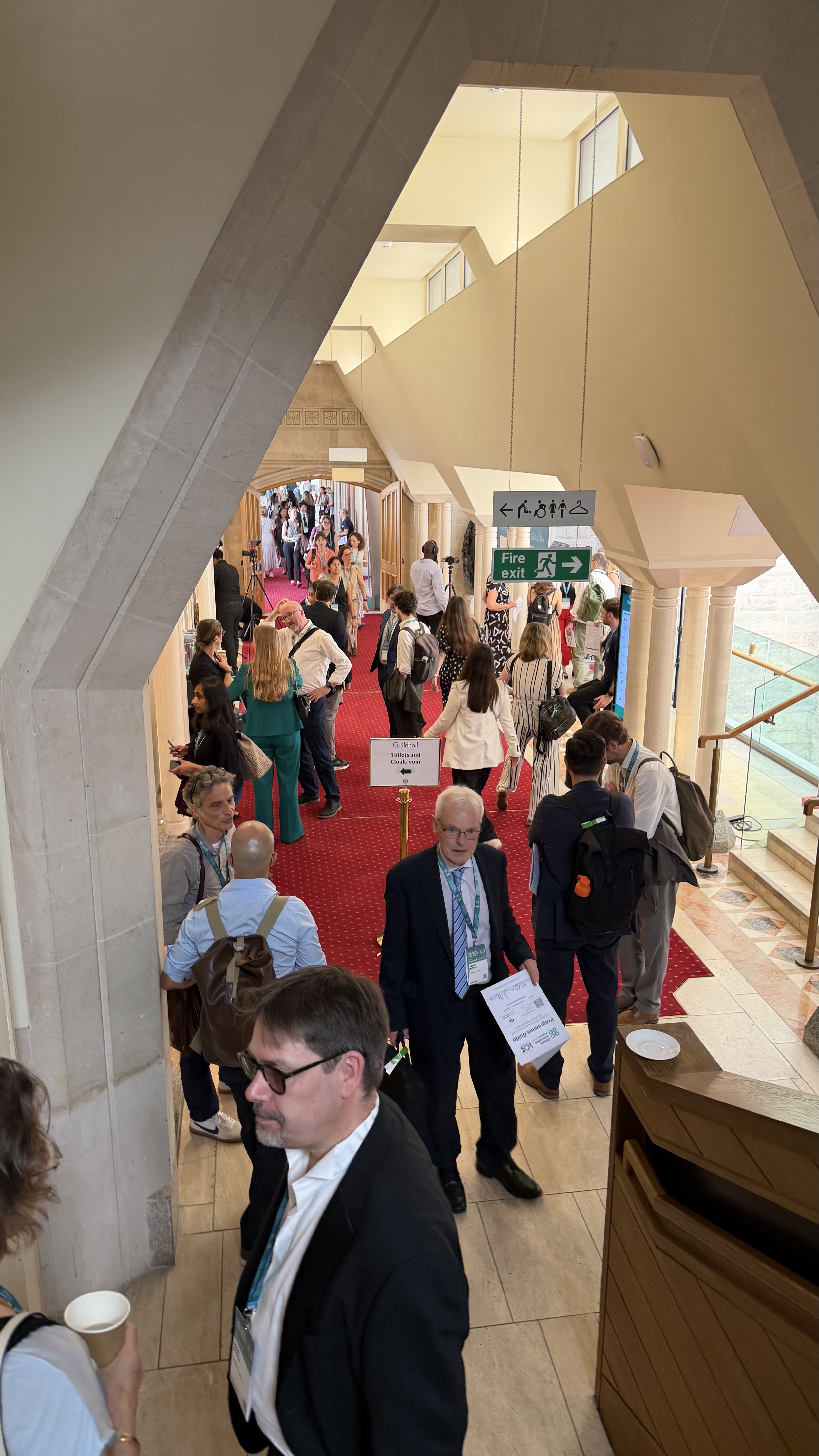
This morning, more than a thousand delegates walked into the grandeur of Guildhall for the opening flagship event of London Climate Action Week: the Climate Innovation Forum. The symbolism was hard to miss. Climate heating is no longer a distant threat you model in charts – it is the air we breathe, the streets we cross, and, on this particular day, the sweat on everyone’s brow.
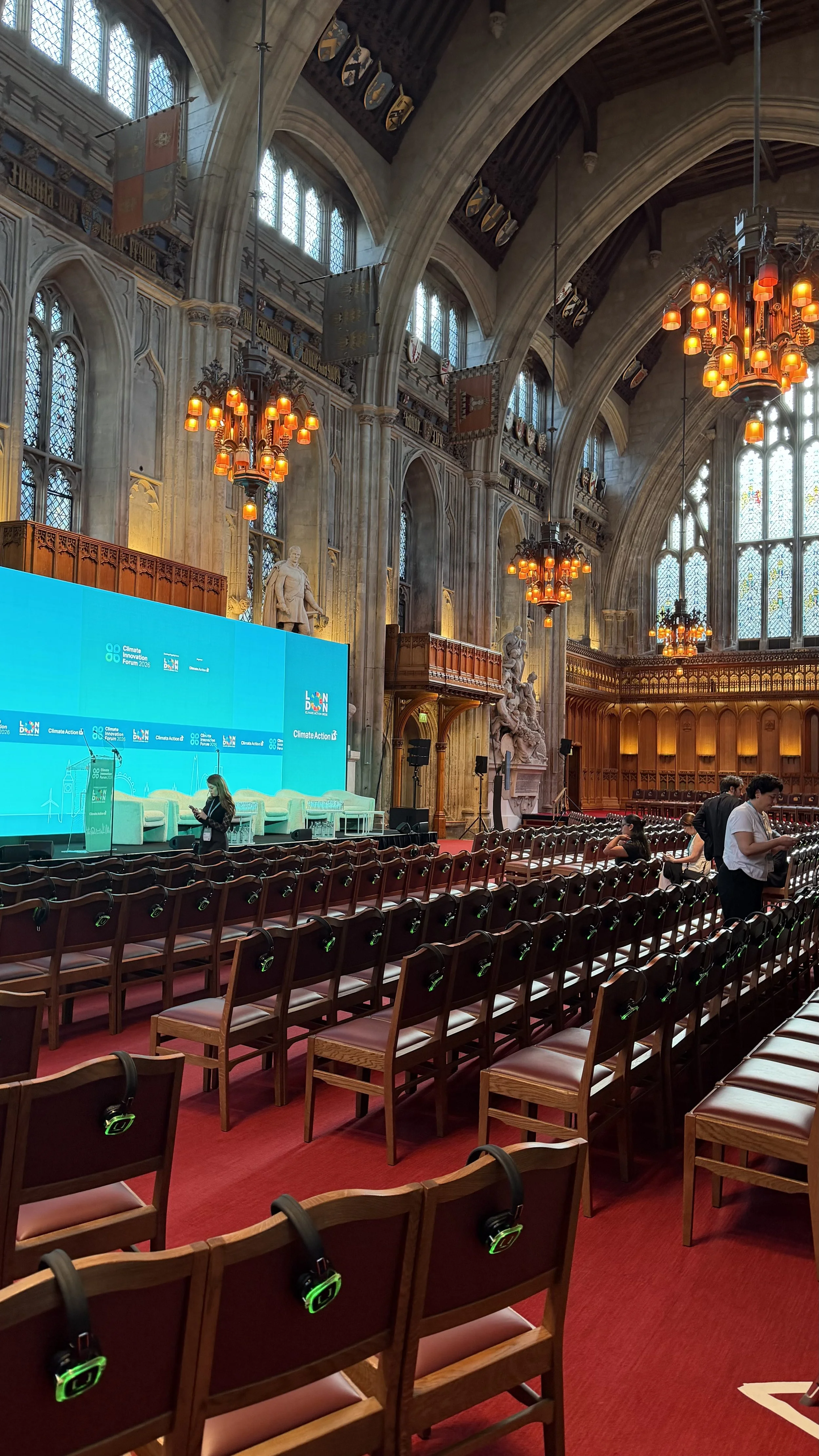
I had been invited to participate alongside ministers from around 30 countries, city leaders, investors, and some of the most influential voices in climate action and policy. Walking into Guildhall felt like stepping into a paradox: a centuries‑old monument to imperial trade and power, now used to discuss how we rebuild our economies for a post‑fossil‑fuel world. Sunlight cut through the stained glass, the stone walls radiated heat, and history felt very close to the conversations about the future.
One of the things that stood out to me – in the sessions and in the many conversations I had with other delegates in the corridors, over coffee and between panels – was how the framing of climate action has shifted. It is becoming clearer that reducing emissions is not just about cleaner air; it is a strategic way to build a high‑quality‑of‑life society. The focus is less on “saving the planet” in the abstract and more on rebuilding society to make it more resilient, fair and prosperous.
Don't get me wrong. Climate is still very much in vogue – but now it sits alongside other strong arguments: energy security, resilience, competitiveness and quality of life. In that sense, the discussions at Guildhall were surprisingly similar to those I heard at the Munich Security Conference earlier this year. The language has changed because the stakes are harder to ignore.
You could hear this shift in the words people used. A few years ago, many would have talked about “green energy”. Here, almost everyone said “clean energy”. It’s a small change that says a lot. “Green” can sound like a lifestyle choice; “clean” sounds like infrastructure. Less about virtue, more about reliability.
Against the backdrop of war with Iran and the vulnerability of the Strait of Hormuz, several of the delegates I spoke with pointed out how exposed we still are to geopolitical shocks as long as we depend on fossil fuels. More than one person called this a historic opportunity to accelerate the transition, precisely because fuel prices are high. As long as the current US administration remains in place, they argued, uncertainty will continue to drive volatility. Iran has shown that it can hold the global economy hostage by controlling a narrow strait. The lesson is simple: a society whose well‑being depends on global fossil‑fuel supply chains has chosen fragility.
In contrast, the clean part of the UK economy is already growing three times faster than the rest, as Dr Rachel Kyte, the UK special representative for climate, underlined. London is now the world’s second‑largest cleantech hub and remains a global centre for architecture and city planning. The message from the forum – in the plenary sessions and in side conversations – was clear: the future is not a story of sacrifice; it is a growth story. The question is not whether we can afford to act, but how much longer we can afford to wait.
One core theme of the day was climate collaboration in a fragmented world. André Corrêa do Lago, President of COP30 in Brazil, reflected on the role of COP at this moment in the transition. He reminded us that consensus is essential for producing the documents and agreements that underpin climate diplomacy – but that signing an agreement is not the same as implementing it. Reality gets in the way.
This difference between agreement and implementation kept coming up. Selwin Hart, United Nations Special Adviser to the Secretary‑General on Climate Action and Just Transition, spoke about the “window of action” that opened in Brazil, where the action agenda was established. Given today’s geopolitical tensions, he argued that investments in climate resilience and adaptation are now central – not nice‑to‑have extras. (This echoed many of the points I have made earlier about strategic autonomy and urban resilience.)
In many of the discussions I joined between sessions, I kept returning to a point that research makes clear (see the paper I've published here) but that politics often ignores: internal friction determines whether implementation succeeds or fails. We talk about consensus as if it is only needed at the moment of decision‑making, and as if implementation is a technical exercise that follows automatically. In practice, if you cannot build and maintain consensus on implementation, all ambitions will, sooner or later, be overturned by organisational resistance. There are still very few formal structures or methods for this – with the notable exception of frameworks such as the Actionable Consensus Framework (ACF), which place identity and local anchoring at the centre.
This link between identity, place, and policy became very concrete during discussions with city leaders. Mete Coban, London’s Deputy Mayor for Environment and Energy, described how climate change is already having a big impact on the city – but not in the same way for everyone. Some neighbourhoods are more exposed to flooding, heat or poor air quality than others.
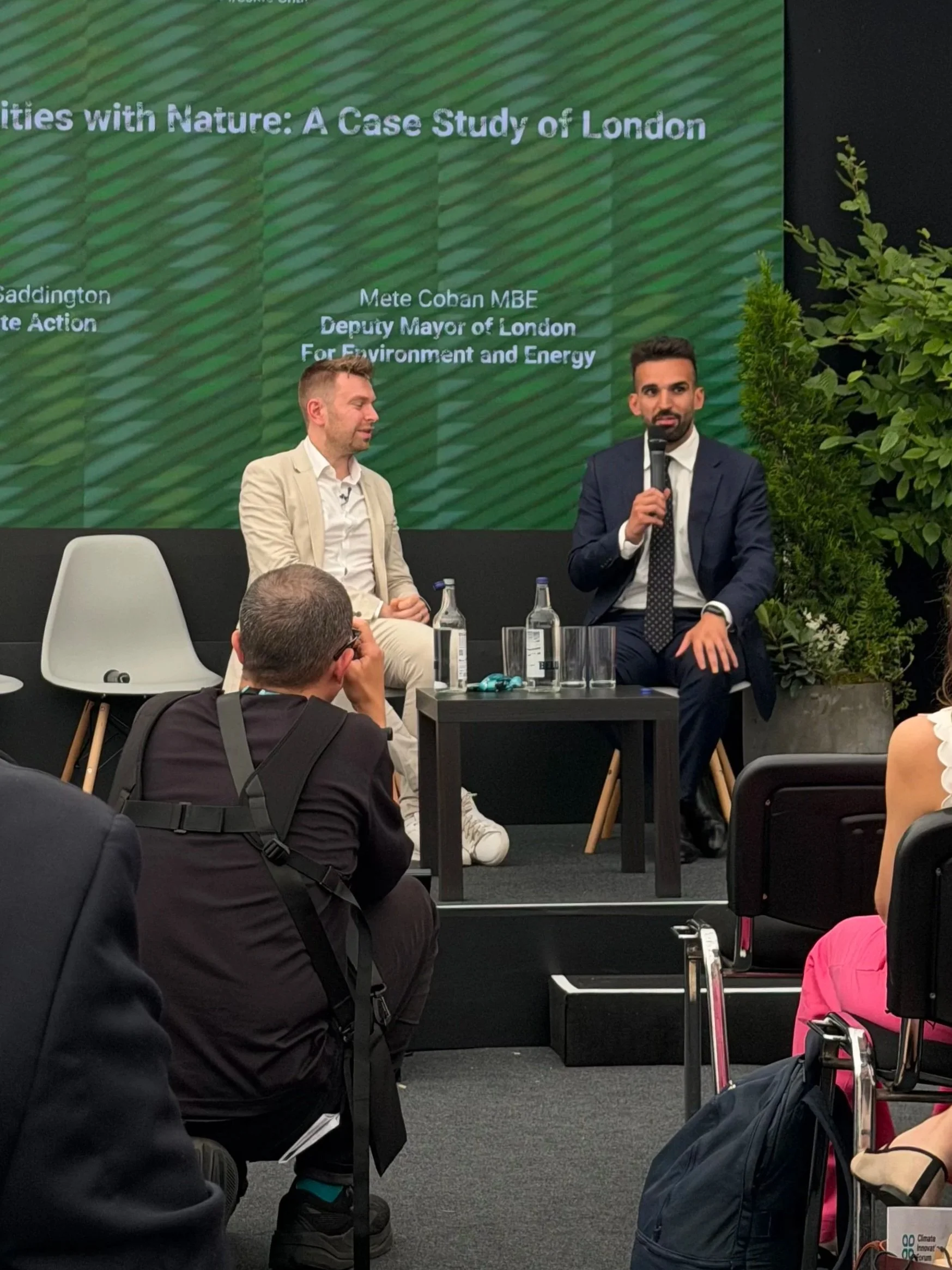
“We have to restore nature in the city,” he said, arguing for nature‑based solutions. One story illustrated this well: recurring floods around Ealing station in west London had long been a headache – until the city reintroduced beavers upstream. Rather than another expensive piece of grey infrastructure, a change in the ecosystem solved the problem. A small but powerful example of how solutions that work with nature can be both cheaper and more resilient.
Coban also stressed that how policy is delivered matters just as much as the policy itself. Communities must feel that they own the solution, not that change is being pushed on them from above. This links directly to the ideas at the heart of ACF: identity, local anchoring and participation. After all, why would anyone choose to live in a city whose well‑being depends on international politics – on what happens in a narrow strait far away – if they could live in a city that has taken control of its own resilience?
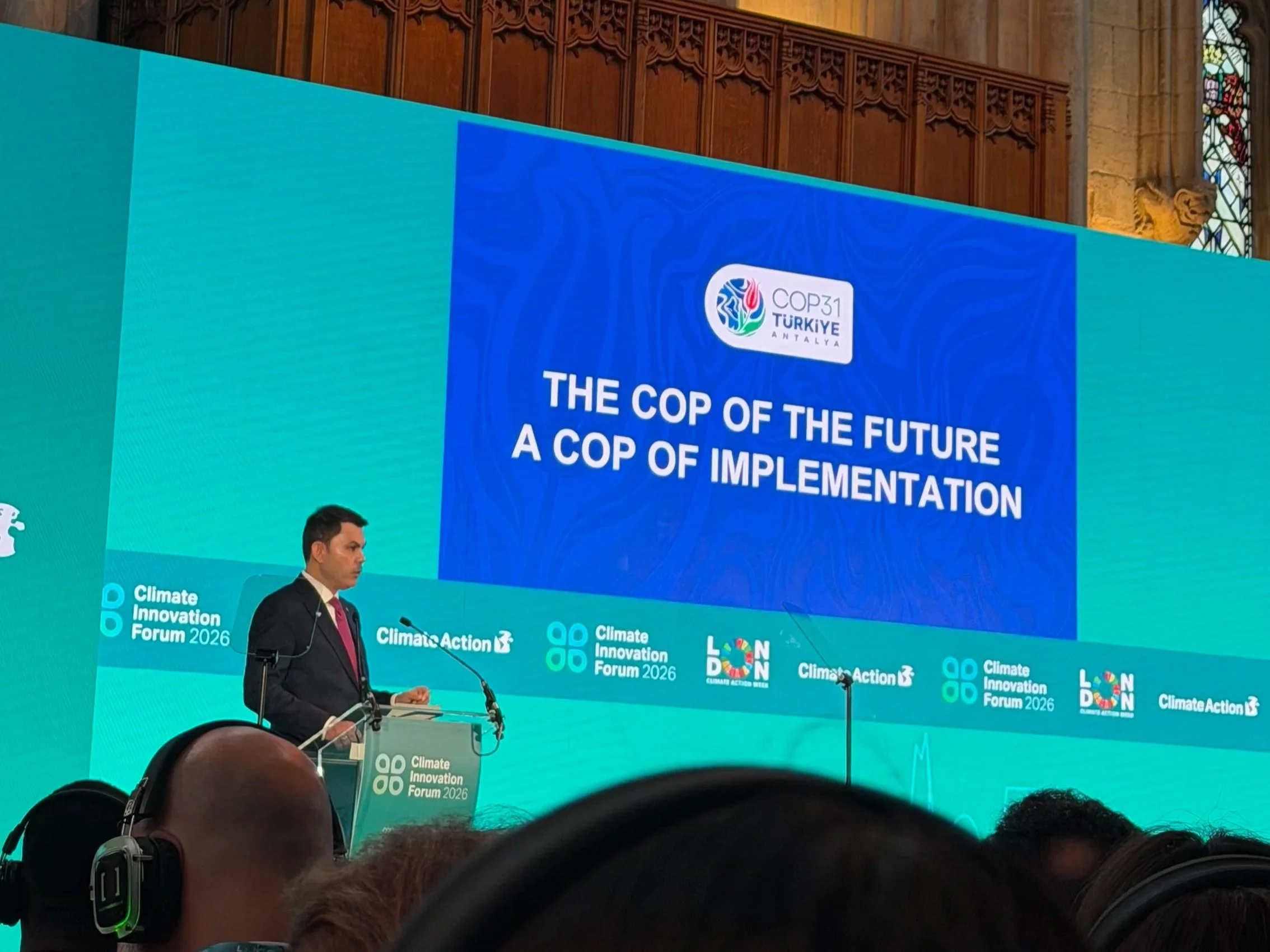
On the international side, Murat Kurum, Turkey’s Minister of Environment, Urbanisation and Climate Change, presented Turkey’s strategy ahead of COP31 under the banner of an “action agenda”. The focus is on building a climate implementation bridge between policy and finance – “a COP of the future, a COP of implementation,” as he put it. Another sign that we are moving from declarations and targets to questions of sequencing, financing and delivery.
As the day finally drew to a close, in heat that still felt heavy, Al Gore took the stage as the last speaker. He was both defiant and optimistic. “We will win this,” he said, “it’s only a question of whether we will win in time.” He imagined our children asking us, “What were you thinking?” and reminded us of our moral responsibility to act. But even that moral argument now feels almost secondary, because there are so many concrete arguments: economic opportunity, resilience, security.
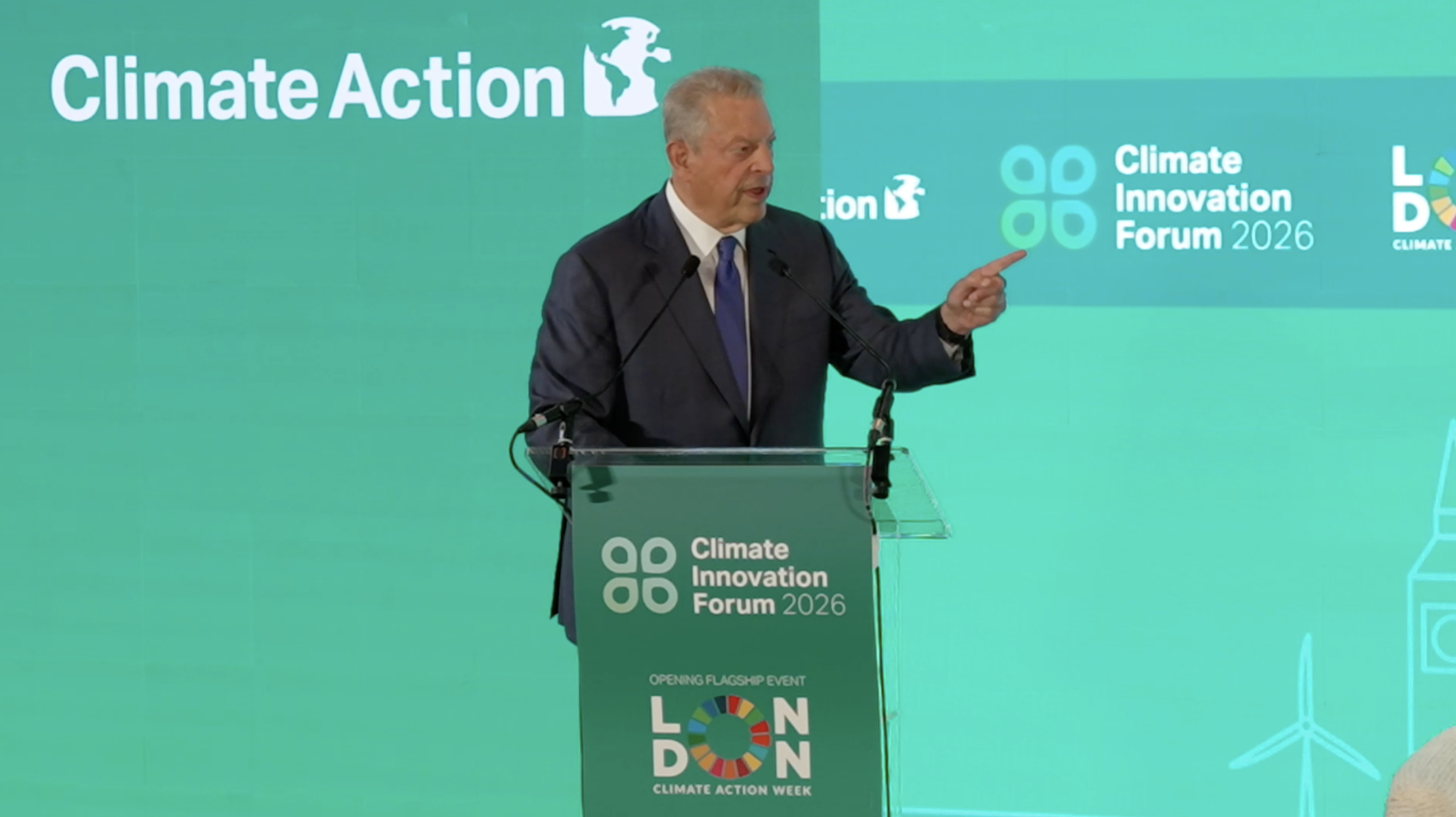
The line that stayed with me was his claim that political will is a renewable resource. In a room full of policymakers, investors and practitioners, it served as both encouragement and a challenge. The standing ovation that followed was long and genuine – and yet, as I sat there among more than a thousand other delegates, fanning ourselves with the programme in the thick London heat, I kept thinking about what happens after the applause.
That is, in many ways, the core concern of how to bridge the ambition-action gap. The real challenge now is to turn these moments – the grandeur of Guildhall, the big speeches, the record‑breaking temperatures outside – into the everyday, often invisible work of implementation.
Turning ambition into action means designing institutions that can handle internal friction, building local ownership of solutions, and treating climate policy not as a moral add‑on but as the backbone of a prosperous, resilient society.